

How Can I Tell if I Have Fibroids?
With fibroids affecting up to 80% of women, a gynecologic surgeon explains risk factors, signs and symptoms, and how to treat them.
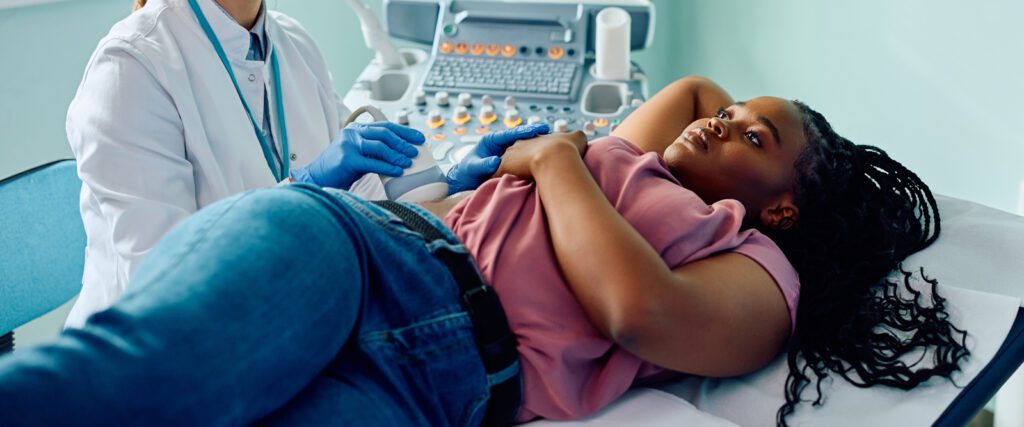
Uterine fibroids, non-cancerous growths made up of muscle and fibrous tissue that develop in the wall of the uterus, are extremely common: They affect about 70 to 80% of women by the age of 50. However, not all women who have fibroids are symptomatic. And fibroids symptoms can be commonly mistaken with other women’s reproductive conditions. So how can you tell if fibroids are an issue?
“If you have heavy periods and bulk symptoms (urinary urgency, constipation, or a palpable mass in your belly), ask your doctor if an ultrasound is appropriate,” says Dr. Sierra J. Seaman, a gynecologic surgeon at NewYork-Presbyterian/Columbia University Irving Medical Center. “There’s no magic bullet for preventing fibroids, but catching and treating them early can certainly help manage the condition.”
Health Matters spoke with Dr. Seaman to better understand what causes fibroids, common symptoms, and what treatment options are available.
What causes fibroids?
While the exact cause of fibroids is unknown, some factors that play into their growth include family history of fibroids, specific genetic mutations, and response to hormones such as estrogen, progesterone, and growth hormones.
Are there different types of fibroids?
Different types of fibroids are classified based on the location within the uterus.
Picture the uterus as a hollow fruit. The most common type of fibroid is the intramural, which is located in the meat of the fruit (the muscular wall of the uterus.) There are also submucosal fibroids, which are located inside the fruit (the uterine cavity), almost like seeds or a pit. And lastly, there are subserosal fibroids, which grow on the rind of the fruit (the outer surface of the uterus).
Who is at risk of developing fibroids?
All women of reproductive age are to some degree at risk for developing fibroids.
However, women in their 30s to 40s, women who have not had any children, women with a strong family history of fibroids, and women with obesity or hypertension, are most likely to develop fibroids. Black women are also two to three times more likely to develop fibroids than white women.
What do fibroids feel like?
The majority of fibroids are small, completely asymptomatic, and do not require treatment. However, depending on the size, location, and number of fibroids, symptoms may occur, such as:
• Heavy or prolonged menstrual bleeding
• Abnormal bleeding between menstrual periods
• Pelvic pain or pressure
• Abdominal bloating
• Urinary frequency
• Abnormal bowel function
• Low back pain
• Pain during intercourse
• Anemia
• Reproductive problems
Fibroids can be as small as a pea and can grow to be as large as a grapefruit or larger. Some women with very large fibroids can even appear to be pregnant.
How are fibroids diagnosed?
Fibroids can change and evolve over the course of time during reproductive years. They can grow, shrink, and change in number. Addressing them early can help decrease the risk of complications caused by larger fibroids.
Fibroid symptoms may be commonly confused with other conditions, such as ovarian cysts, endometriosis, and PCOS. As a result, it can be difficult to know if a patient has fibroids just from hearing about their symptoms, so we usually rely on imaging to make a diagnosis.
Usually, a provider will begin with an exam and an ultrasound to determine if there are fibroids. Some patients may need follow up imaging, such as an MRI or a saline ultrasound for a more detailed look.
What does treatment for fibroids look like?
Treatment for fibroids isn’t always necessary. But if they are causing heavy menstrual bleeding, pelvic pain, problems with fertility, or other significant symptoms, I would usually recommend those patients for treatment. Depending on the patient’s age, symptoms, fertility goals and the type of fibroids, there are three main types of treatment available:
Medical therapies, which are used to treat mild fibroid symptoms, include:
• Over-the-counter pain medications, such as ibuprofen, for mild pain
• Hormonal therapies, such as birth control, to manage bleeding symptoms
• Non-hormonal medications such as tranexamic acid, to manage bleeding symptoms
Procedural management uses minimally invasive, non-surgical, procedures to treat fibroids:
• Uterine artery embolization or fibroid embolization, which is a non-surgical procedure that cuts off the blood supply to the fibroids in order to shrink them. This especially helps with bleeding-related symptoms.
• Some patients may be candidates for radiofrequency ablation or MRI-guided high-intensity ultrasound treatment, which destroy fibroid tissue without surgical incisions.
Surgical treatment may be necessary in cases of large or numerous fibroids, for fertility optimization, or when medical or non-surgical methods are not effective. There are a few different types of surgery to remove fibroids:
• Myomectomy, which is the removal of the fibroids themselves. This preserves the uterus and may allow patients to pursue a future pregnancy.
• Hysterectomy, which is removal of the uterus. This permanently removes and prevents all fibroids and menstrual bleeding.
The route of surgery may be abdominal via laparoscopy (tiny incisions on the abdomen) or a larger incision, vaginal, or hysteroscopic (small camera inserted through the vagina and cervix) depending on the size, number, and location of fibroids, as well as the patient’s goals.
It’s important to speak with your doctor so that we can work together to figure out which treatment plan is best for you.
Can fibroids cause cancer?
Less than 1% of fibroids are cancerous, called a leiomyosarcoma. We worry about this most in patients after menopause who are having new fibroid issues.
Can fibroids affect fertility or pregnancy?
Fibroids may affect pregnancy depending on the type, number, and location of the fibroids. That said, most people with fibroids are able to have healthy pregnancies.
A healthy uterine cavity is critical for successful implantation and pregnancy, and fibroids can distort the inside of the uterine cavity. As a result, fibroids can increase the risk of the placenta separating prematurely from the uterine wall (called placental abruption), fetal malposition (this is when the baby is not turned head-down), and preterm labor. Having submucosal fibroids, which grow on the inner part of the uterus, as well as having large or multiple fibroids, can especially increase these risks.
Do fibroids remain a common issue for women entering perimenopause and menopause?
Because of the drop in estrogen and progesterone levels, most fibroids will shrink and sometimes completely disappear after menopause.
Are fibroids dangerous?
Fibroids rarely cause life-threatening health issues. However, heavy bleeding caused by fibroids can sometimes lead to iron deficiency or anemia. It’s important to see a doctor if you experience bleeding for more than seven days, are saturating a pad or tampon every one to two hours, or are consistently bleeding twice in the same month.
I never want women to think they need to push through discomfort. They should always meet with their provider if they are experiencing any of these symptoms; there are many different ways we can help.