

What Is an Aortic Aneurysm and When Is It an Emergency?
A cardiac surgeon explains the risk factors, monitoring and life-saving treatment for this silent condition.
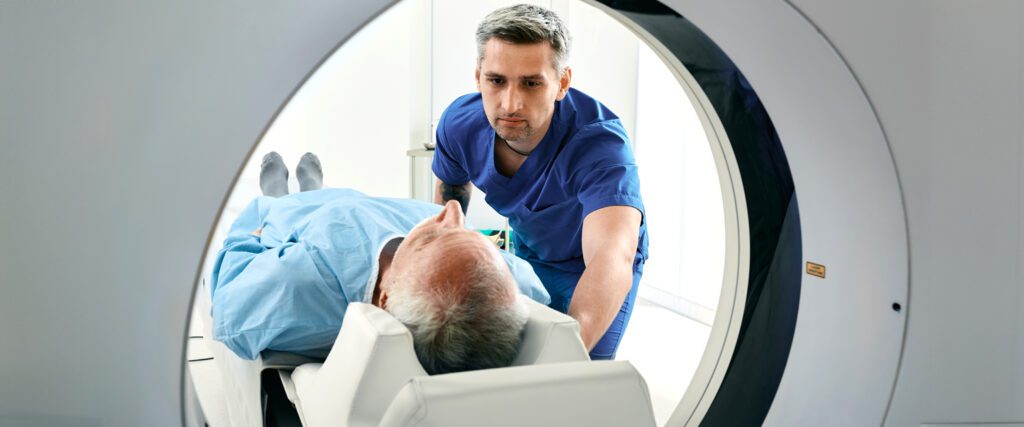
Aortic aneurysms are often called a “silent killer” because they rarely show symptoms until they become a crisis. However, they are more common than many people realize. Aortic aneurysms contribute to nearly 10,000 deaths in the United States each year. While these statistics are sobering, Dr. Eilon Ram, a cardiac surgeon at NewYork-Presbyterian/Weill Cornell Medical Center, shares that understanding what an aortic aneurysm is and how to monitor it can save your life.
Health Matters spoke with Dr. Ram to answer to common questions about what an aneurysm is, who is at risk, and when it becomes a life-threatening emergency.
To start simply, what is the aorta, and what is an aneurysm?
The aorta is the main artery carrying blood from the heart to the rest of the body. Each of our organs gets its blood supply from the aorta.
An aneurysm is a weakening of the aortic wall that makes the aorta bigger than a regular one. It often grows slowly and causes no symptoms. This is the main problem: It just grows, and you will never know until you get a scan for another reason, or something dangerous happens.
Why is an enlarged aorta so dangerous?
When the aorta is bigger than usual, the force on the wall is bigger, and the wall itself is thinner. This causes you to be prone to the destruction of this wall.
It could either rupture totally — which is a medical emergency because no blood is going to the organs — or it could be a dissection. A dissection is a “pre-rupture” where the layers of the aortic wall separate. This is also a medical emergency because it can block blood supply to the brain, kidneys, or legs.
Who is most at risk for developing this condition?
In general, risk factors include:
- Age: The older you are, the higher the risk. We usually see this in people over 60.
- Lifestyle: High blood pressure and smoking are significant risk factors.
- Genetics: If you have a family history of aortic disease or sudden death in the family, it puts you at risk.
If there are no symptoms, how do people find out they have an enlarged aorta?
Usually, you find it because you had a scan or test for a different reason. There are three main tools to detect an aortic aneurysm: a heart ultrasound (Echo), a chest CT scan, or an MRI.
Once we find it, we track it. It always gets bigger with time; it never gets smaller. In most cases, we scan the patient once a year to monitor the size. We don’t base our treatment on symptoms, because you won’t have symptoms until it might be too late.
How is an aortic aneurysm treated?
It’s treated with surgery. A normal aorta is up to 3 centimeters in diameter. If it is larger than 3 centimeters, it is considered “dilated” (enlarged). In general, when it reaches 5 to 5.5 centimeters, that is when we want to intervene with elective surgery. At that size, the risk of a “catastrophic event” becomes higher than the risk of the surgery itself.
What happens during the surgery?
Usually, it is an open-heart surgery where we take out the weak portion of the aorta and replace it with a type of fiber called Dacron. This is a safe and effective material that is used in many types of surgeries. Once it’s replaced, you are back to your life and protected. You won’t need to take blood thinners or special medications after the surgery. That portion will never get an aneurysm again.
What is the recovery process like?
It usually means a few days in the hospital. After about a week, you can go home. Within a few weeks, you are back to your baseline. The entire process takes about a month.
The biggest misconception is that surgery is the “end of the world.” People don’t understand how safe it is these days. The risk of death by an elective surgery is less than 1%, while the risk of not treating a large aneurysm can be 10% to 20% per year.
When should someone consider this an immediate emergency and call 9-1-1?
If a rupture or dissection happens, it is devastating. Up to 30% of patients who dissect the aorta, even if they’re in the hospital, may not survive the event.
You should seek emergency help immediately if you experience:
- Sudden, severe pain in the chest or upper back (often described as a “tearing” sensation).
- Symptoms of a stroke (confusion, weakness on one side).
- Sudden shortness of breath.
What is your final piece of advice for readers?
Prevention is key. If you have family members with an aneurysm, get checked. If you have been diagnosed, don’t neglect it. Stay on top of your annual scans. These aneurysms don’t go away on their own, but when treated before it becomes an emergency, the results are excellent.
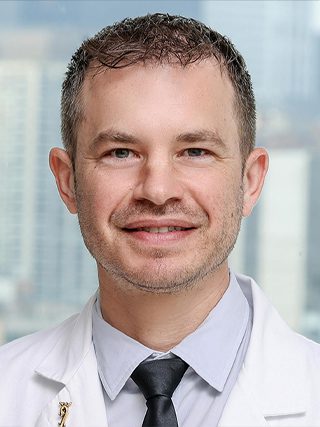
Eilon Ram, M.D., is a cardiac surgeon in the Department of Cardiothoracic Surgery at Weill Cornell Medicine and an attending cardiothoracic surgeon at NewYork-Presbyterian/Weill Cornell Medical Center, specializing in advanced aortic surgery. His expertise spans coronary artery bypass grafting (CABG), aortic, mitral, and tricuspid valve repair and replacement, surgical treatment of atrial fibrillation (MAZE), cardiac tumor resections, and the management of aortic aneurysms and dissections.