

Signs And Symptoms of Dehydration in Kids and How to Notice Them
A pediatrician explains how to recognize when your child is dehydrated and when to seek medical help.
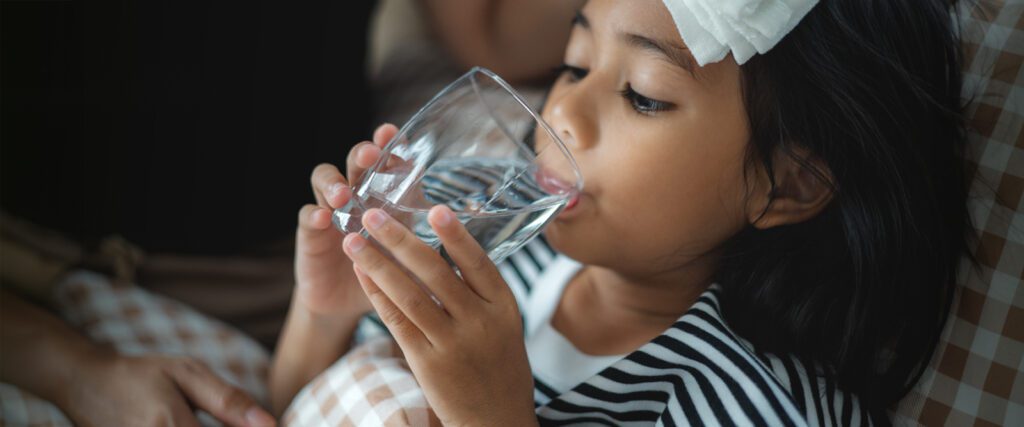
Whether it’s from a long afternoon at the playground or sports practice, or after a busy school day, kids often forget to drink enough water, and they can quickly become dehydrated. But being active isn’t the only culprit — dehydration in kids is especially common when children catch a stomach virus or have a high fever, and in severe cases it can become a serious medical condition.
“Children are more vulnerable to dehydration than adults, and oftentimes the symptoms of dehydration are subtle,” says Dr. Melanie Wilson-Taylor, a pediatrician at NewYork-Presbyterian Komansky Children’s Hospital of Children’s Hospital of New York. “Dehydration can also happen in just a few hours, especially with babies and young children who are losing water and not drinking, so it’s important to know the signs.”
To stay hydrated, Dr. Wilson-Taylor recommends younger children drink about four cups of water per day, and older children closer to eight cups. If a child is losing water from sweating or illness, they should be adding one to two ounces more every hour.
For more on spotting the signs of dehydration in kids and babies, knowing how to treat the condition at home, and when to get medical help, Health Matters spoke with Dr. Wilson-Taylor.

What happens in the body when kids become dehydrated?
Our bodies are more than 70% water, and water is crucial to the function of our brain, heart, lungs, skin, blood, and other vital organs. When there’s not enough water in the body, it affects those vital organs, and kids lose electrolytes, like potassium and sodium. That’s why when a child has severe dehydration, they are at risk of serious complications, including organ failure.
What are the common causes of dehydration?
Illness is a major reason kids get dehydrated. Vomiting, diarrhea, fever, or even a bad cold can prevent kids from wanting to eat or drink.
During the summer, kids are also at risk of dehydration in excessive heat. When children are playing outdoors for extended periods of time, they lose a lot of water through sweating.
What are the signs of dehydration in babies and younger children?
In babies, keep in mind the number of wet diapers. Six to eight wet diapers a day is normal — so if your baby has less than three or four a day, that is a sign of dehydration. We also look at the soft spot at the top of a baby’s head, called the fontanelle. If it’s sunken or pressed in, that’s a sign of more significant dehydration.
Other symptoms include:
- Extreme sleepiness
- No tears when crying
- Feeding less than normal
- Change in behavior (irritability or listlessness)
Once a child is potty trained, they usually need to pee every two to three hours. If they stop urinating, or if they’re having just one or two urinations a day, that can be a sign of moderate to severe dehydration. The color of the urine is also important. Urine should always be very light yellow, almost clear. If it’s more of an orange color, the child is already at mild dehydration.
What are signs of dehydration in older kids?
For toddlers and older children, the symptoms are not so easy to see. If they’re telling you that they’re thirsty, they’re actually already beyond mild dehydration and closer to moderate.
Signs of moderate dehydration in toddlers and older kids include:
- Dry lips
- Sticky mouth
- Sleepiness
- Flushed skin
More severe symptoms can include:
- Lightheadedness
- Muscle cramps
- Headaches
- Fast heart rate
- Confusion
When should you get medical attention?
If they’re showing signs of an altered mental state – if they’re not thinking clearly or having difficulty answering questions – they should get medical attention immediately. Medical attention is also required if their heart rate is higher than normal when they are resting or not moving around.
What are some ways to treat dehydration when there is extreme heat outside?
If they are complaining about being thirsty, take them out of the sun to a cool space, offer them cold water to drink, and for older kids, you can place cool washcloths or ice packs on their neck or under their arms. If they feel hot, check the temperature — if it’s over 102, you should go to the emergency room because they are at risk of heat stroke and severe dehydration. This condition may require intravenous (IV) fluids. Don’t submerge children in an ice bath, because you can lower their temperature too quickly.
How do you prevent dehydration when they are sick or vomiting?
If it is a stomach virus and your child is vomiting, sipping small amounts of water as often as possible is the key. If they’re tolerating that amount after an hour or two, then you can increase the volume. Younger kids need about two ounces of water (about a quarter of a cup) per hour to rehydrate. That amounts to one teaspoon every five minutes, so it does require some intensive support.
The more dehydrated children are, the more aggressively they need hydration. But once a child reaches severe dehydration, they should be taken to the emergency room — you shouldn’t try to treat that at home.
What are some tips for helping kids drink more water?
For most kids, I recommend they take a break every hour to have a cup of water. To motivate younger kids, you can:
- Give a reward, like a sticker or a fun treat, like ice pops.
- Offer foods that are sources of hydration, for example cucumbers, celery, cantaloupe and watermelon.
- Add frozen fruit to water for extra flavor.
- Let them pick a favorite water bottle and customize it.
Should kids be given drinks with electrolytes, like energy drinks?
For most kids, energy drinks are not necessary, and water is the best option. Competitive athletes may need to replace electrolytes if they are sweating excessively, but a typical healthy child just needs water.
Also, some energy drinks are caffeinated, which can be dangerous. Caffeinated drinks are diuretics, so they actually make you urinate more. You really have to look at the labels.