

Reaching the Other Side of Darkness, Building a Beautiful Life in Recovery: Austin Addison’s Story
Austin was climbing the career ladder in New York City until substance use and an untreated mental health disorder upended his life. After a suicide attempt in 2022, Austin decided to seek help, entering NewYork-Presbyterian Westchester Behavioral Health’s addiction rehabilitation program. Today, he lives a life of purpose in sobriety.
This story contains content about self-harm, suicide, addiction.
In his New Orleans home, Austin Addison, 36, sifts through a series of photos that capture his life from his childhood to his early 30s. With each snapshot, he can vividly recall how he was feeling and what he was going through.
A photo of him as the Tin Man elicits memories of homemade Halloween costumes stitched together by Mom; a school portrait at 13 reminds him of the anxiety he had as a closeted gay boy in a conservative Texas town. Photos from his 20s and 30s take a more dramatic turn. Interspersed between smiling images with friends, family, and coworkers are shots of him selling all his belongings in New Orleans’ Jackson Square, and another of his blistered feet after a period of homelessness in Los Angeles — mementos from a six-year period where mental health crises and substance use took over his life.
“I was reckless. I didn’t realize it at the time, but I wasn’t showing much care or attention to my well-being,” Austin says. “It’s natural to be figuring things out in your 20s, but I was using substances to deal with some of the traumatic events and stressors in my life. Ultimately, that led to a downward spiral.”
Today, Austin’s life is one of stability, sobriety, and activism, but the journey to get there didn’t start until he woke up in an emergency room at NewYork-Presbyterian/Weill Cornell Medical Center following what he describes as his lowest point — a suicide attempt, which would ultimately lead him to an addiction rehabilitation program at NewYork-Presbyterian Westchester Behavioral Health Center.
“Quite frankly, I think that saved my life, because if I was still in active addiction, I wouldn’t be where I am today,” he says. “I’d like to think the reason I’m here is to talk about survival and what it’s like on the other side of darkness, that there is light and goodness ahead of us. There is more to stick around for.”
A Fast Rise, an Even Faster Fall
Austin’s challenges with mental health began in adolescence. On the outside, he was an overachiever who was voted most likely to succeed; on the inside, dodging rumors about his sexuality, he lived in fear of being outed and struggled with family relationships. “I was feeling all of these emotions, but I couldn’t tell my parents, I couldn’t confide in my sibling,” Austin says. “You’re constantly wondering if you’re going to give yourself away. Academics was a distraction from my true identity.” At 16, he began taking antidepressants to deal with depressive thoughts.
In college, he found the courage to come out and after graduating, moved to New York City with a few friends to pursue his dream of a career in marketing. He found a job in the agency world, where he excelled. There were long nights at work, but there were also plenty of parties where alcohol and drugs were in easy reach.
“My life in New York was work hard, play harder,” he says. “I started abusing substances when I was in college, but not to the same degree as in New York. I was drinking like a fish and adding marijuana and recreational drugs to the mix. Sobriety was a foreign concept to me. I was pushing the gas pedal too hard, until I ultimately broke.”
In 2016, he had his first manic episode, which led to him being hospitalized and diagnosed with bipolar disorder. “When I first received the diagnosis, it crushed me,” Austin says. “I didn’t know what to do with it. I tried different combinations of medications with different psychiatrists that didn’t always work for me, and I also wasn’t living in a way that was conducive to positive outcomes for someone with my diagnosis. I was using other drugs with my medication, and it wasn’t helping me live a healthy lifestyle.”
My life in New York was work hard, play harder. Sobriety was a foreign concept to me. I was pushing the gas pedal too hard, until I ultimately broke.
Austin Addison
At 27, his addiction and mental health struggles ultimately led to him losing his six-figure job. Over the next six years, Austin bounced between cities and jobs. There were periods when he could hold down a nine-to-five, but those would end when the alcohol and substance use escalated. Inevitably, new manic episodes would compound the situation and lead to months-long periods of couch surfing, run-ins with the law, and homelessness. “I was unmedicated, living off the high of mania. I was lost and not doing anything to find my way back to some semblance of normalcy,” he says. Between 2016 and 2022, he was hospitalized approximately 14 times for mental health crises.
When Austin realized he wouldn’t be able to get through this on his own, he reached out to his college friends, who were still in New York and offered him a place to stay until he could get back on his feet. They provided an important lifeline, but he couldn’t rid himself of feelings of hopelessness. On January 18, 2022, while his friend was out of town for work, he wrote a letter for his loved ones, went to a local park, and took what he believed was a lethal dose of medication.
Austin’s next memory is waking up three days later in a hospital room at NewYork-Presbyterian/Weill Cornell Medical Center, with a view of the East River and a surprising sense of peace. He later learned that somehow, he was able to get back to the apartment, where friends met him and took him to the hospital. “I thought I had no future, so I made that choice,” he says. “But I’m grateful that my plans didn’t work out, because there was something greater in store for me. I consider January 21 my ‘sobriety day’ because it’s when I would begin my journey into recovery.”
Closing a Chapter on Addiction
Once Austin was medically stabilized in the emergency department, he was transferred to NewYork-Presbyterian Westchester Behavioral Health Center for psychiatric stabilization. A member of his care team asked him a basic question: Did he want to look at his relationship with drugs and alcohol and confront the role it played in his life?
“They asked me in a way that was empowering and very much my decision to make,” Austin recalls. “I said yes, to repair relationships, give me hope, and to redirect my life — not just to make a course correction, but to really do a 180. I wanted to start over.”
He made the decision to enter the hospital’s addiction recovery service, a multiweek inpatient program where he could work with a comprehensive care team that included psychiatrists, psychologists, social workers, substance use counselors, nurses, and other staff.
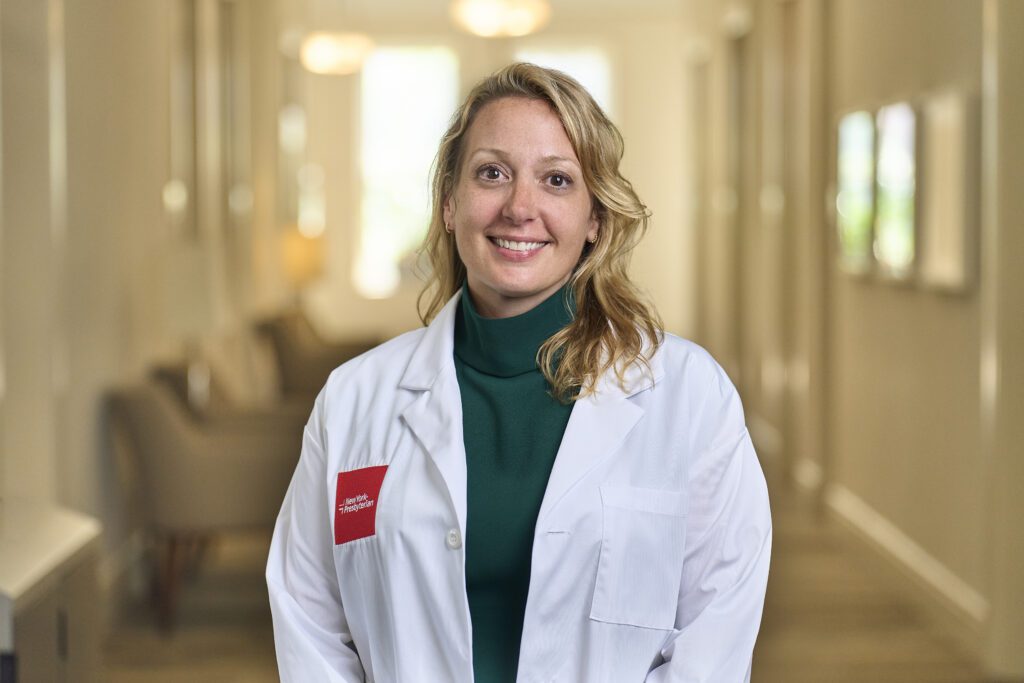
“Our disciplines come together to really understand the person and contribute to their best possible outcome,” explains Dr. Dora Kanellopoulos, a neuropsychologist and service chief, specialty inpatient services at NewYork-Presbyterian Westchester Behavioral Health Center. “Addiction recovery doesn’t work when we pressure people into treatment; the individual has to be ready to engage in that next level of care. We listen carefully to their motivations for change, and work in very detailed ways to understand how to bring out their resiliency. It takes a lot of courage to say yes to voluntarily remaining in the hospital for several more weeks.”
Austin spent two weeks in the addiction recovery service, spending time in both group and individual therapy to understand the triggers for his substance use and learn new routines, habits, and thought patterns to help with regulating emotions. Each morning, his care team would set goals with him, which could involve practicing cognitive behavioral therapy to stop catastrophic thoughts; developing time-management skills; or learning about self-care and setting boundaries.
A cornerstone of the program is helping people develop coping skills to replace the role that drugs and alcohol once played in their lives, explains Dr. Kanellopoulos. “Mindfulness, deep breathing, understanding their motivations and behaviors, having boundaries — all these things can be beneficial in addiction recovery and may also be skills people never learned. We really try to fill the gaps we see with customized treatment.”
Austin says one of his biggest takeaways was the concept of radical acceptance: accepting the reality of painful and difficult situations without judgment. “My psychologist pointed out that I wasn’t getting past things that happened to me 14, 15, 16 years ago,” he says. “I never thought that I could say, ‘OK, I acknowledge that something happened, but I don’t have to dwell on it. I can move past it and recognize that it was part of my story, but not my whole story.’”
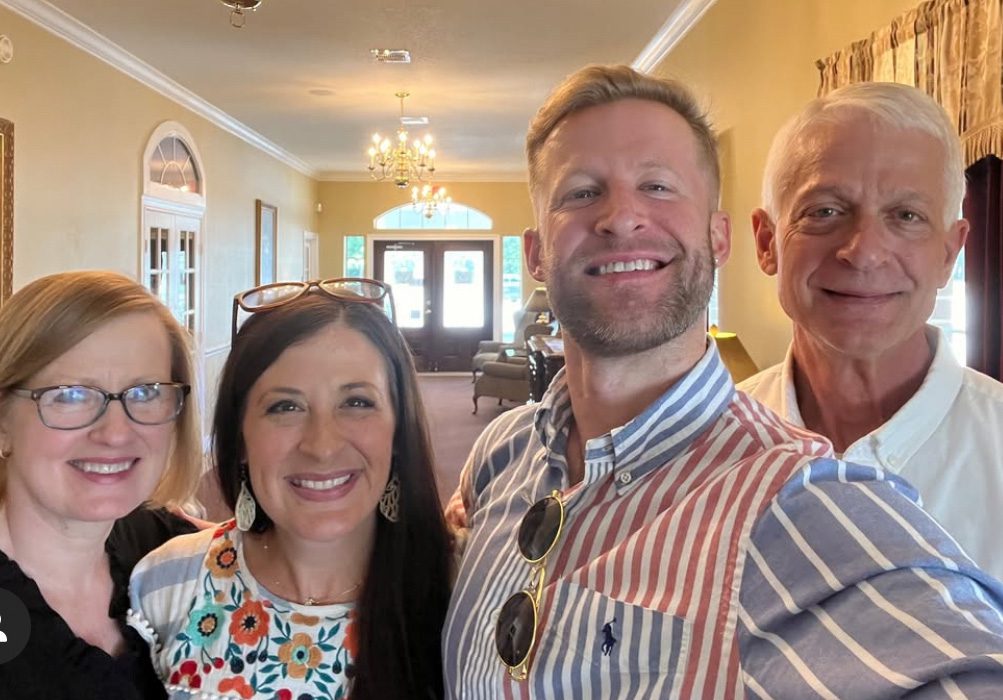
He also learned that he has to fight his tendency to isolate when he is struggling. While battling addiction, Austin had periods of estrangement from his family that were exacerbated by his unmanageable behavior. “I was of the mind that I was better off alone, but actually the opposite was true,” he says. “When I was at my lowest points and having suicidal ideation, I wasn’t connected to my family, and the absence of a close-knit community really led to my depression and the mindset of wanting to escape. I realized that isolation was dangerous.”
“Ultimately, we equate addiction with isolation, and recovery with connectivity,” explains Amanda Ventola, a substance use disorder counselor at NewYork-Presbyterian Westchester Behavioral Health Center. “Austin was in my self-care group, and we talked a lot about healing the interpersonal relationships he had with family members. We discussed healthy boundaries and taking care of himself, because then he can be there for the individuals in his life that support and love him.” While in the program, Austin reached out to his parents to begin the process of repairing their relationship and they have been close ever since.
In February 2022, prepared with new tools for sober living, Austin left the addiction recovery service and transitioned to a residential addiction recovery program in Long Island for three months. Soon after, he settled back in New Orleans, where he works today as a marketing consultant. He says he’s found the right medication regimen to manage his bipolar disorder, maintains a network of sober-living friends, does advocacy work through an LGBTQ+ nonprofit for people in recovery, and wakes up each day just trying to “live in the positive.”
“In this new chapter of my life, I have incredible relationships with my family, my close friends, and my community, which I could not have pictured while I was in active addiction,” he says. “If I could talk to myself on January 18th, 2022, I would remind myself that there are people whose lives would be impacted by the absence of my own. I would take myself by the shoulders and say, ‘Hang on a little while longer. Give yourself grace. Give yourself radical acceptance. Give yourself an opportunity to see how much love and affection there is for you in this life.’”
Additional Resources
If you’re having thoughts of suicide or are in need of support, call or text 988 or visit here to connect with a counselor at the 988 Suicide & Crisis Lifeline; or contact the Crisis Text Line by texting HOME to 741741.
- Learn more about NewYork-Presbyterian’s psychiatric services.