

How to Get Kids Back On a School-Year Sleep Schedule
An expert provides smart strategies for helping school-age kids return to a structured, post-summer bedtime regimen.
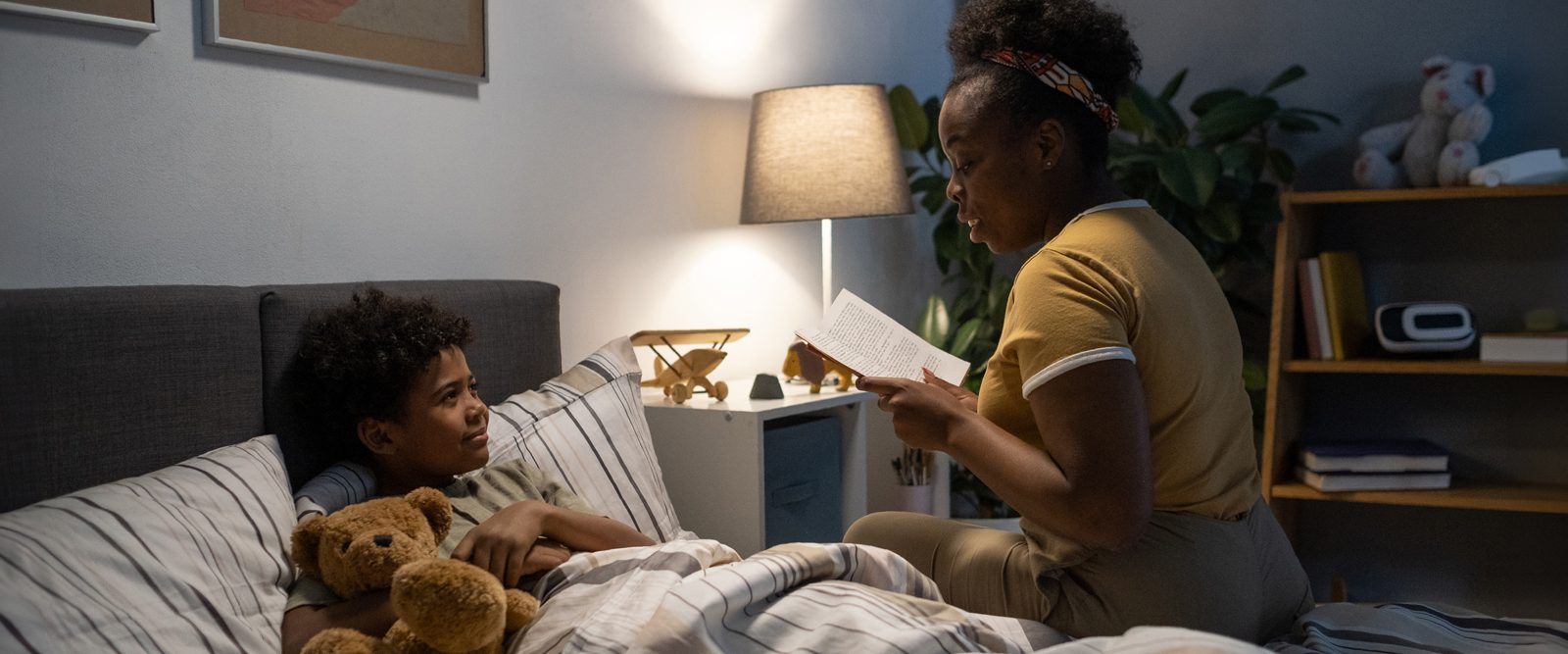
Kids’ sleep schedules often get off track during the summer with vacations, camp, and sunlight lasting late into the evening. All this can lead to trouble sleeping when it’s time to return to a structured schedule at the start of the school year.
The benefits of a good night’s sleep are well-known. It reduces stress, the frequency of sickness, and it regulates weight, among other advantages — especially for growing children. Getting adequate rest not only helps children perform better in school, but it’s also important for their overall health.
“Insufficient sleep may affect not only a child’s ability to concentrate in the classroom, but their immune system and brain development,” says Dr. Corinne Catarozoli, a pediatric psychologist at NewYork-Presbyterian/Weill Cornell Medical Center.
The good news? There are simple steps parents can take to help their children get the sleep they need. Here, Health Matters asked Dr. Catarozoli for her tips for establishing a back-to-school sleep schedule.

How can you prepare a child for a back-to-school sleep schedule?
Parents can help kids prepare for early morning wake-ups by gradually shifting bedtime and wake-up time earlier by increments of 15 minutes. This means that if a child has been going to sleep at around 9:30 p.m., the next night’s bedtime should move to 9:15 p.m., and then the following night’s bedtime should become 9 p.m., and so on.
When should you start?
Beginning this process about two weeks prior to school starting, depending on your child’s bedtime, allows your child to adjust to the new routine so the first day of school is manageable. Trying to change a bedtime abruptly will likely result in a child not feeling tired enough to fall asleep initially and subsequently feeling extremely fatigued upon waking up in the morning.
How much sleep does a child need to be alert during school?
Hours of sleep needed is dependent on a child’s age. The American Academy of Sleep Medicine published the following recommendations for the amount of sleep needed per 24 hours to promote optimal health in children and adolescents based on sleep research and expert opinion.
Infants younger than 4 months are not included because of the wide range of normal variation. These guidelines offer a range of hours since different kids have different sleep requirements, similar to adults. In general, the optimal amount of sleep a child needs is the amount required for him or her to be functional and alert during the day.
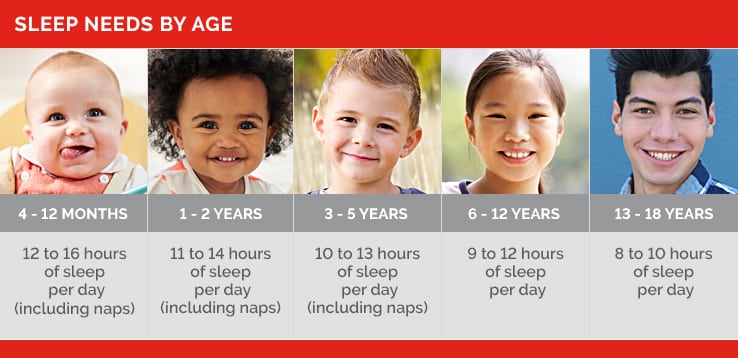
Source: American Academy of Sleep Medicine
Why is sleep so important?
Sleep is a normal activity that we need to stay healthy and happy. There are many important things that our body is doing while we sleep, such as growing, processing new information we learned during the day, and giving our organs, such as the heart, blood vessels, and pancreas a chance to rest and repair. A child’s brain needs sleep so they can remember what they learn, be able to pay attention and concentrate, solve problems, and think of new ideas. The body needs sleep so muscles, bones, and skin can grow, and the body can stay healthy and fight sickness.
How do you know if your child is not getting enough sleep?
Interestingly, children often do not appear sleepy when tired, but rather exhibit hyperactive behavior with an inability to concentrate on one task and a tendency to jump from activity to activity. This can sometimes be mistaken for attention-deficit/hyperactivity disorder (ADHD).
Other daytime symptoms that may indicate your child is sleep-deprived include constant complaints of feeling tired, difficulty with attention, irritability, academic problems, and behavioral issues such as aggression. Adolescents can become moody and even develop depression and anxiety.
Physiologically, insufficient sleep can cause weight gain and obesity. Needless to say, obesity can lead to a whole host of diseases, among them obstructive sleep apnea that further impacts sleep.
Why do sleep patterns change during teenage years?
Teens experience a shift in their circadian rhythms during puberty. Melatonin, the hormone that makes us feel sleepy, is released later in the evening, so teens naturally fall asleep later and subsequently sleep later in the morning. Other social and environmental factors can also impact sleep during teenage years. Teens may have increased stress from academic or social demands, and they tend to have more screen time or keep electronics in their bedrooms, which has been shown to be associated with poorer sleep.
What bedtime rituals do you recommend for a good night’s rest?
Consistent, calming activities will help children fall asleep more easily. Following the same rituals each evening, such as taking a bath, putting on pajamas, and reading a book will signal the body that it is time to wind down.
Teaching children to fall asleep on his or her own is also key to decreasing nighttime awakenings. Staying or lying with them until they fall asleep creates a sleep association, which is a condition that must be present in order to fall asleep. The same sleep associations learned at bedtime are then needed to fall back asleep during the night. Children who can fall asleep on their own will be able to soothe themselves back to sleep without assistance if they awaken briefly overnight.
Should I allow my child to watch TV or use other screens in bed?
Stopping screen use, including watching television and using laptops, tablets, and cellphones, at least one hour prior to bedtime and turning off all devices at night make for optimal sleep.
The blue light from screens can inhibit the release of melatonin, the hormone that causes a child to feel drowsy, making it harder for them to fall asleep. Light and noises from cellphones can also trigger nighttime wake-ups and tempt children to look at their phone if they do wake up overnight. All electronics are best left outside of a child’s bedroom.
Learn more about dealing with sleep issues in children.
Corinne Catarozoli, Ph.D., is an Associate Professor of Psychology in Pediatrics and Psychiatry at Weill Cornell Medicine and an attending psychologist at NewYork-Presbyterian/Weill Cornell Medical Center.