

How Pregnancy Can Affect Your Vision
From blurry vision to dry eyes, an optometrist and retina specialist explain how pregnancy can affect your vision, including why it happens and how to treat it.

The body changes drastically during pregnancy, with rapid hormonal shifts affecting everything from the digestive system to your emotional state. But it might come as a surprise that pregnancy can affect your vision and cause other eye-related symptoms.
Shifts in glasses or contact lens prescriptions, blurred vision, and dry eyes are common changes during pregnancy due to increased blood volume, water retention, and estrogen and progesterone levels.

“Just as pregnancy affects every part of the body, it can affect the eyes. In many cases with blurred vision or dry eyes, these changes are usually temporary, and symptoms resolve after delivery,” says Dr. Daniel Diamond, an optometrist at NewYork-Presbyterian/Columbia University Irving Medical Center. “But patients don’t have to suffer and can find ways to be comfortable, including use of artificial tears.”
While pregnancy may be the first time some people experience these symptoms, it can also exacerbate pre-existing eye conditions.
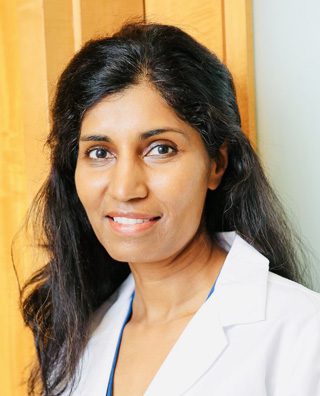
“Pregnancy is a stress test: what happens to us during it can present higher risk for what can happen after – for example, gestational diabetes or gestational high blood pressure,” says Dr. Srilaxmi Bearelly, an ophthalmologist and retina specialist at NewYork-Presbyterian/Columbia University Irving Medical Center.
“For the most part, people do well with vision during this time, but there are conditions like diabetic retinopathy, high blood pressure retinopathy, and thyroid eye conditions that can worsen. The key is to catch things early and manage it with your health care provider.”
Dr. Diamond and Dr. Bearelly shared with Health Matters what to know about vision changes during pregnancy, including common conditions, who’s at risk, and when it’s time to seek treatment.
How can vision change during pregnancy, and what are common conditions?
Dr. Bearelly: Because of shifts in how the body holds on to fluids, there can be corneal and lens changes in the eye, which can cause changes in glasses and contact lens prescriptions. These changes typically revert to a person’s normal vision after delivery.
Vision can also change from a variety of other causes during pregnancy including diabetes, high blood pressure, changing blood volumes and hormones.
Dr. Diamond: Changes throughout the rest of the body during pregnancy can affect tear production, causing dry eyes. Less tears can make eyes feel scratchy or have a burning sensation due to more friction, and it can also make it uncomfortable to wear contact lenses.
Separately, a shift in vision doesn’t necessarily mean a negative change. Some people report that while they become a little more nearsighted — meaning their vision gets blurry at a distance — these changes improve their up-close vision, so it makes reading a bit easier. This isn’t something that can be predicted but is possible.
Common conditions include:
- Dry eyes
- Melasma, or increase in skin pigmentation around the eye
- Blurry vision
Why does blurry vision happen during pregnancy?
Dr. Diamond: Blurry vision can happen due to water retention when the front of the eye changes its shape, affecting how your eye focuses light.
Floaters can also be more noticeable when there’s a change in vision and it’s blurry or harder to focus. They’re usually just changes in the gel within our eyes casting shadows, and majority of the time aren’t a sign of problems. But for anyone experiencing floaters that come out of nowhere, they should get checked to make sure the retina is healthy.
Dr. Bearelly: Blurry vision can sometimes be something that people notice first as opposed to their blood pressure being high, or their blood sugar being high. It can be a symptom of something else going on, such as gestational diabetes or preeclampsia.
Can pregnancy make existing eye conditions worse?
Dr. Bearelly: It’s possible that pregnancy can worsen certain existing eye conditions like diabetic retinopathy or high blood pressure retinopathy, which are diseases that affect the blood vessels in the retina and cause vision damage. But for the vast majority, pregnant patients who have these conditions can do well if their symptoms are managed by their care team.
Other conditions that may be affected by pregnancy include:
- Graves’ disease
- Uveitis, or inflammation of the eye’s middle layer
- Idiopathic intracranial hypertension, related to swelling of the optic nerve that can be associated with headaches
- Vein occlusions in the retina
How are common, pregnancy-related vision changes treated?
Dr. Diamond: While blurry vision can cause a change in prescription, I typically don’t recommend buying new glasses or contacts during pregnancy as it’s often a temporary change. As long as their general eye health is good, we typically check in after delivery, and if the change remains postpartum, we can update prescriptions then.
For dry eyes, I tell patients to stick to glasses instead of contacts and to moisturize the eyes using lubricating, artificial tear eyedrops that are preservative-free, which are typically pregnancy-safe.
Who is at increased risk of pregnancy-related vision problems?
Dr. Bearelly: People at increased risk during pregnancy include those with diabetes, high blood pressure, advanced maternal age, increased BMI, rheumatologic diseases, and other problems like kidney or liver problems.
Dr. Diamond: Those who have a prior, known eye health condition may be at risk, because we can’t necessarily predict how blood flow or hormonal changes can further affect the eyes. It’s always a good idea if you’re planning to get pregnant to have an eye exam beforehand, and if anything changes during pregnancy, to let your eye doctor know.
When is it time to see a doctor?
Dr. Bearelly: If changes are sudden, or seem unusual, get it checked out by your eye care provider.
Dr. Diamond: If you experience constant symptoms that don’t go away or don’t allow you to function normally, see an eye doctor. The eyes can be a mirror into the whole body. Keeping your healthcare provider up to date on any new symptoms and seeking evaluation from a multi-specialty care team can help you get the best possible outcomes.